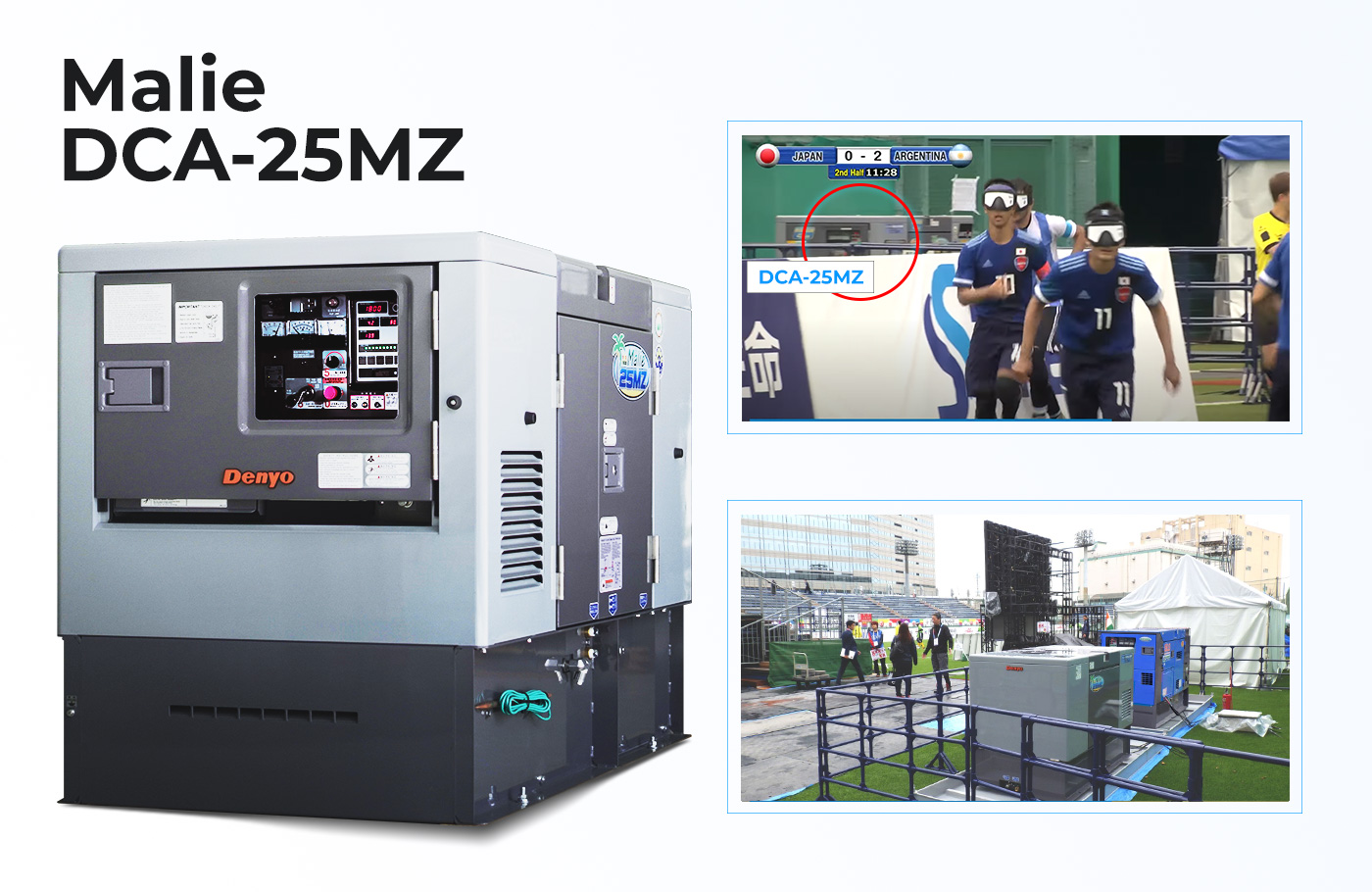
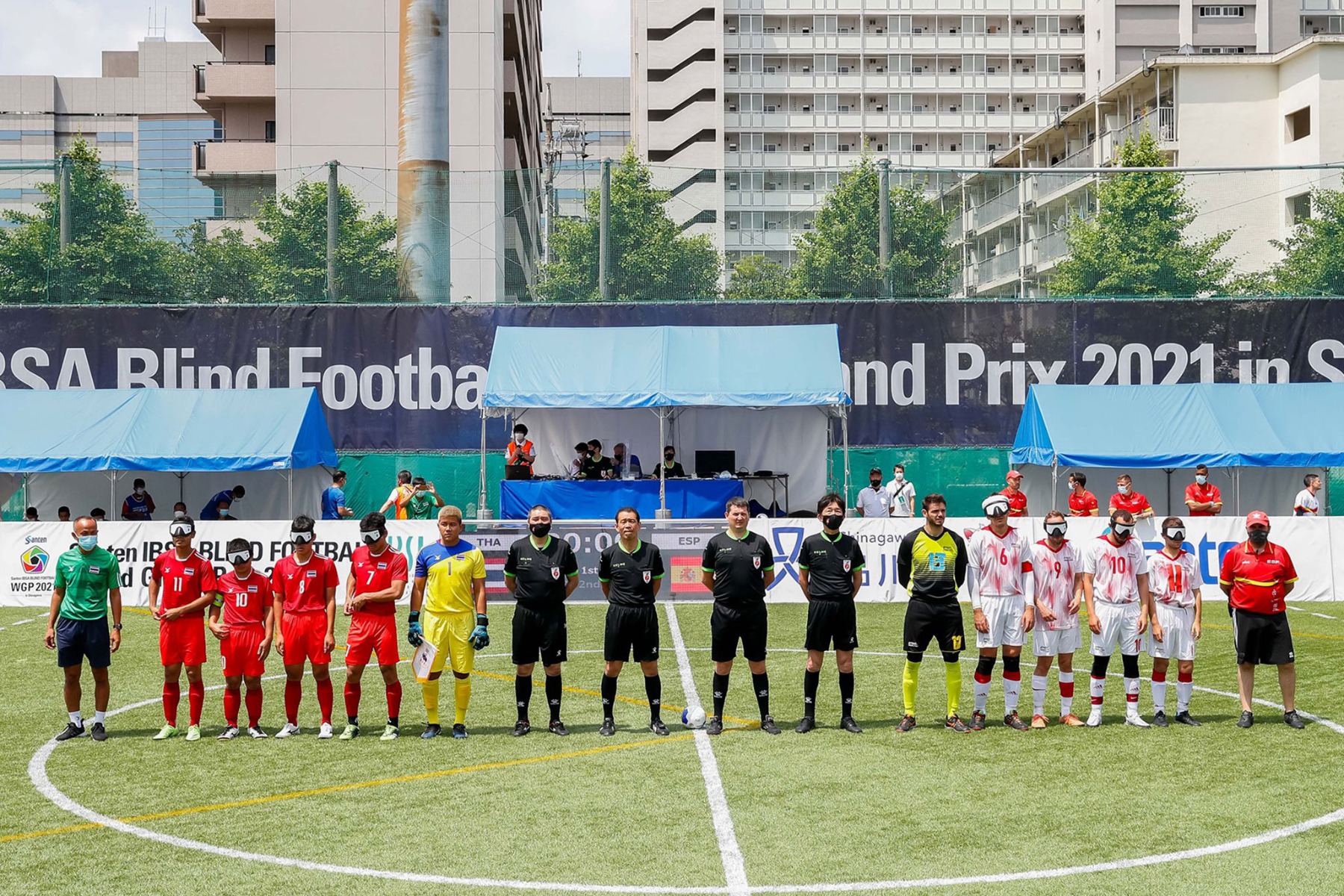
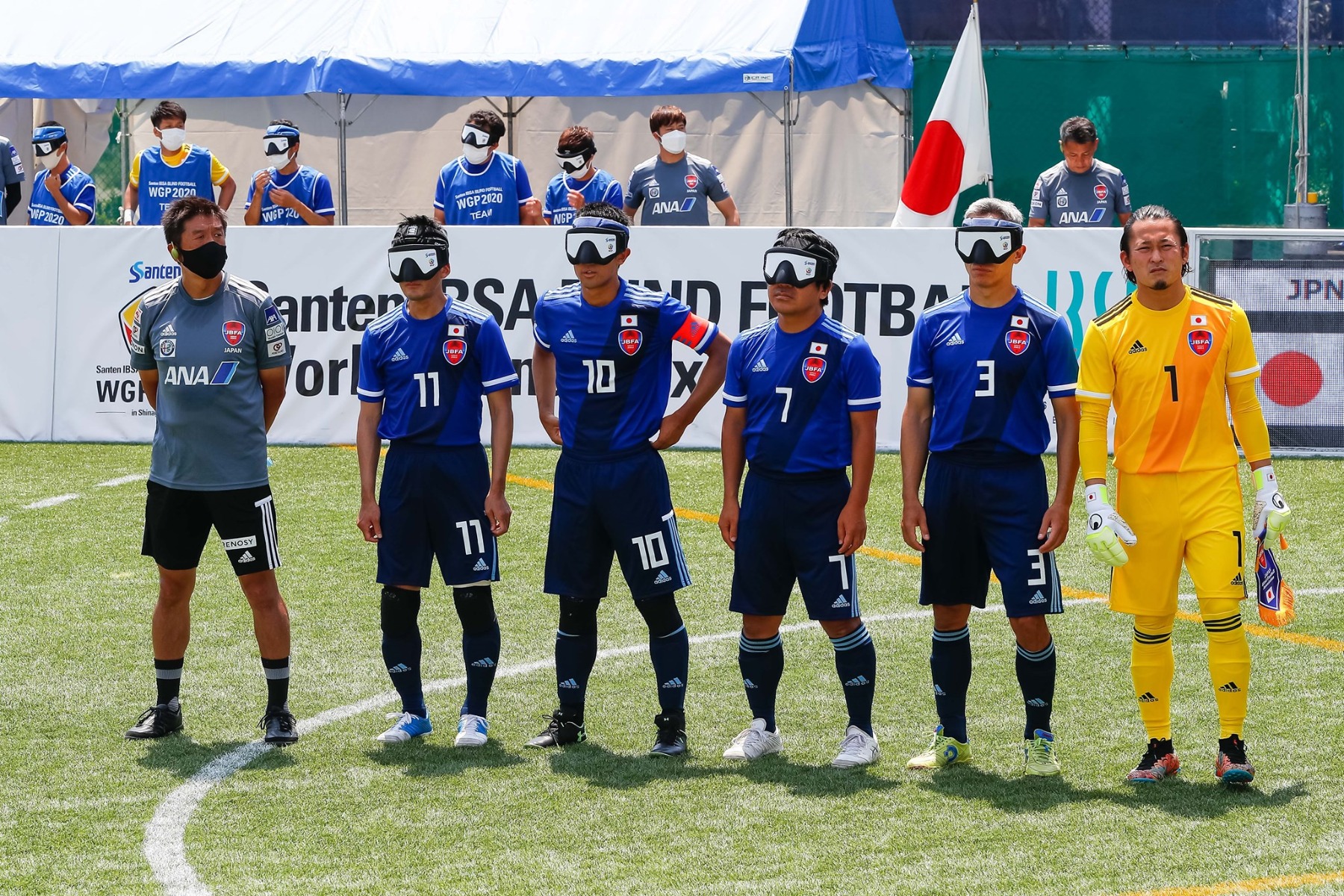
Each team has five players on the pitch at any time – four outfield players who are visually impaired and a sighted goalkeeper. To ensure that the competition is on equal terms, all outfield players wear a blackout eyeshade and receive crucial verbal instructions from the team’s goalkeeper, and coach who are strategically positioned on the halfway line or behind the goal that their team is attacking.
While mainstream football around the world is played amidst chanting and cheering, the silence in the blind version of the game is contrasting and necessary. The many aspects of blind football are designed with numerous considerations as it is purely sound-based for the visually impaired players.
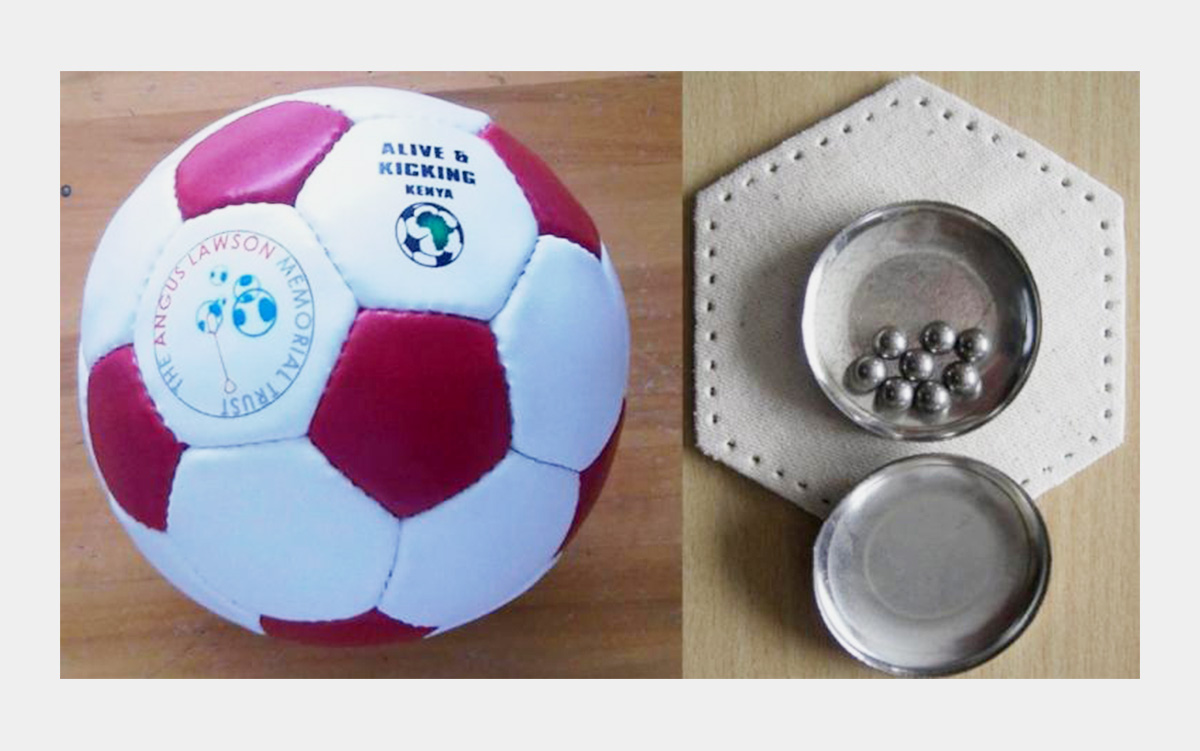
Special ball that contains ball bearing
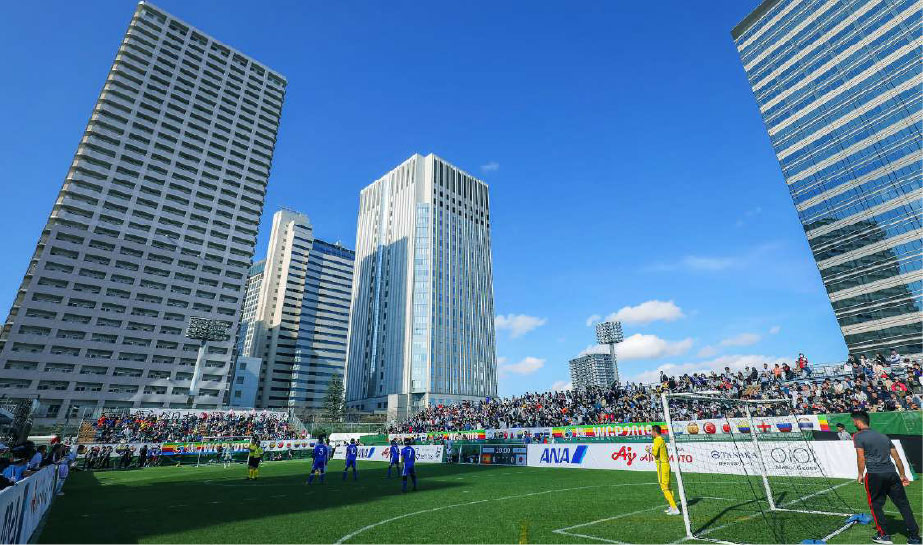
For example, the playing pitch is relatively small (38m x 18m) in comparison to the regular football field (91m x 48m). Hence, the sound could travel from one end to another while surrounded by rebound panels designed to create an acoustic echo to help players identify the location of both the ball and themselves (the clicking of their fingers). The ball as well, is no ordinary football. It contains ball bearings that constantly emit a gentle rattling noise that helps players locate it within the field.
Throughout the game, the surroundings and spectators are to be quiet because players need to hear to gather information and react – any noise distractions will have an adverse effect on their orientation and communication. Imagining not having the sense of sight and solely relying on their hearing, therefore silence is extremely important to the players. With high expectations, Denyo’s customer – a Japanese equipment rental company was called in to provide the quietest power solutions to support this significant outdoor event.







 Images courtesy to